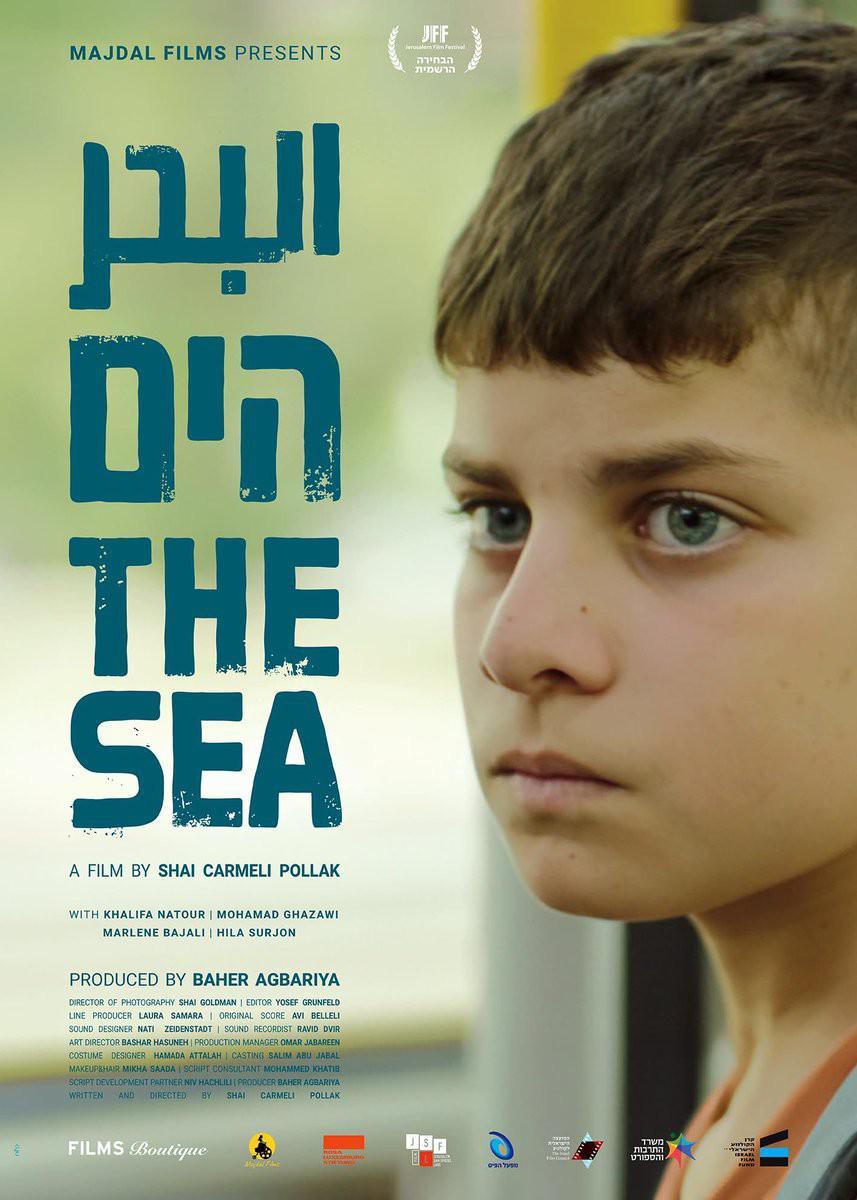
The results of the Ophir Prize, Israel's highest award, were announced recently. The Palestinian drama "The Sea" unexpectedly won the top honor, causing a stir in Israel. Israeli Culture Minister Miki Zohar even publicly threatened to shut down the film festival.
Israel's Culture Minister criticizes award-winning film for damaging the image of the IDF
The Ophir Award, named after the renowned Israeli actor Shaike Ophir, was formally known as the Israel Film Academy Award before its name change in 2004. It is also informally known as the Israeli Oscar. It remains the country's highest film award, having been presented for 35 years since its inception in 1990. The award is voted on by the over 700 members of the Israel Film Academy, with the ceremony typically held in September each year. Barring any unforeseen circumstances, the Best Picture winner becomes Israel's entry for the next Academy Award for Best International Feature Film.
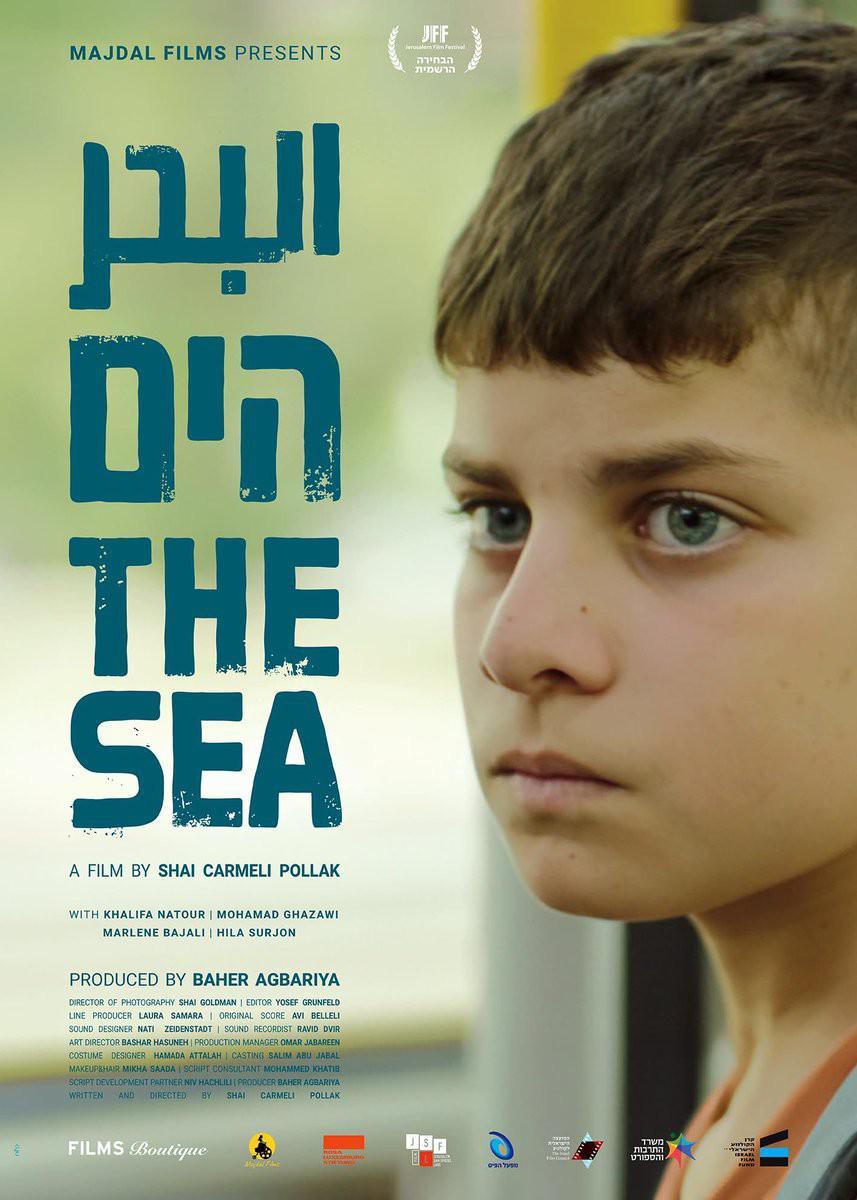
"The Sea" tells the story of a Palestinian teenager who wants to go to Tel Aviv to see the sea.
The Sea, the Best Film winner of this year's 36th Ofir Awards, was written and directed by Israeli director Shai Carmeli-Pollak. It tells the story of 12-year-old Khaled, a Palestinian boy from a rural village, who longs to see the sea. It's a school trip to Tel Aviv. Having lived in the West Bank his entire life, Khaled has never seen the sea. However, at a military checkpoint, Israeli soldiers declare Khaled's travel permit invalid. While his classmates happily board the bus, Khaled is ruthlessly turned back. However, his desire to see the Mediterranean Sea is so strong that, despite not knowing the way and not speaking Hebrew, Khaled embarks on a solo journey to the sea, facing numerous obstacles along the way.
"The Sea" was filmed in 2023 with a production cost of approximately 4 million RMB, funded by a grant from the Israel Film Fund. At this year's Ophir Awards, "The Sea" was shortlisted for 13 awards, ultimately winning five: Best Picture, Screenplay, Actor, Supporting Actor, and Original Score.

Stills from The Sea
However, the award drew strong criticism from Israeli Culture Minister Micky Zohar the following day. He issued a public statement, saying that "The Sea" contained many negative portrayals of Israeli soldiers, presented from a Palestinian perspective, and cast both Israel and the IDF as negative figures. He said it was "shameful" that such a film had won the Ophir Prize. "Nothing could be a greater slap in the face of Israeli citizens than the embarrassing Ophir Awards ceremony, where the winning films portrayed our heroic soldiers in a defamatory and false light. They are fighting and risking their lives to protect us."
In protest, he threatened to withdraw government funding for the Ofir Prize. "Israeli citizens continue to pay out of their own pockets for an award that represents less than one percent of the Israeli population. This absurd situation is about to end, because I have decided that starting in 2026, this abominable award ceremony will no longer be funded by taxpayers. Under my watch, Israeli citizens will no longer pay out of their own pockets for an award ceremony that discredits our brave soldiers."
He also expressed his consideration of establishing a new "Israeli Oscars." He said, "The Israel Film Academy no longer represents the broader Israeli public, but instead has become a platform for a small group of Israeli extremists on the margins of society, damaging the fabric of Israeli society."
Several anti-war films were nominated
Many people believe that the threat from the Israeli Culture Minister was entirely predictable. The announcement of the Ophir Prize nominees on August 3rd has drawn intense attention from both government departments and the public.
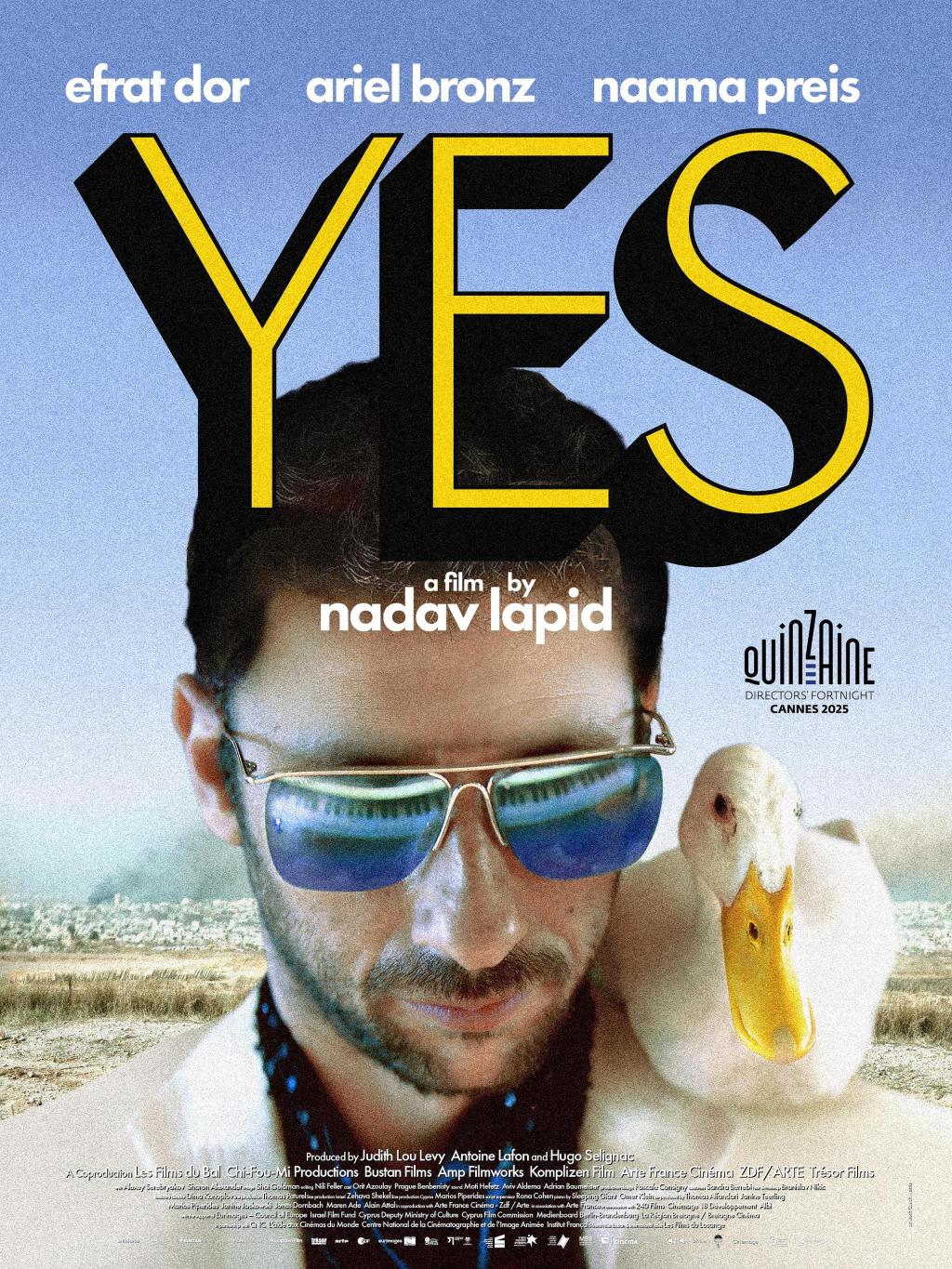
Nadav Lapid's new film, "Yes," is a satire on the Israeli government.
In addition to "The Sea," renowned Israeli director Nadav Lapid's "Yes!" also received multiple nominations, including Best Picture, Director, and Actor. Set in contemporary Israel, the film satirizes the establishment from the perspective of conscientious intellectuals. Meanwhile, director Netalie Braun's "Oxygen," while set during the war between Lebanon and Israel, tells the story of a mother longing for her son's return from military service. This story also directly addresses the Israeli-Palestinian conflict and has been viewed by right-wing Israelis as negative propaganda. "Oxygen" has also received Ophir Award nominations for Best Picture, Best Actress, and Best Supporting Actor.

"Oxygen" tells the story of a mother who longs for her son to return from military service soon.
Just hours before the Ofir Prize ceremony last week, an independent UN commission released its report alleging Israel is committing genocide in Gaza. The ceremony was held in a solemn and somber atmosphere, with many attending in black, emblazoned with anti-war slogans. Several of the laureates emphasized their strong desire for peace in their speeches, criticizing both Hamas and Israel.

Young actor Mohammad Ghazawi (right) won the Best Actor Award for his role in "The Sea".
Thirteen-year-old actor Muhammad Gazawi, who won the Best Actor award for his role in "The Sea," also called for children around the world to "live a life without war" in his acceptance speech. Arab-Israeli actor Khalifa Natour, who played his father in the film, won the Best Supporting Actor award. Natour did not attend the awards ceremony, but entrusted Gazawi to read a statement: "Ever since the Israeli army entered Gaza, the genocide has filled me with deep fear. I have no words to describe the severity of this horror. At this moment, nothing else matters to me, not even movies and theater."
In addition, veteran Israeli director Uri Barbash, who received the Lifetime Achievement Award that evening, condemned the Netanyahu government's actions in his speech and called for unity among filmmakers. "We must unite, all of us, Jews and Arabs, religious and secular. We must all work together to eradicate evil from our beloved land. The sanctity of life and human dignity must not be limited by racial or geographical boundaries."
Later, in response to the Minister of Culture's threats, the Israel Film Institute, which organizes the Ofir Awards, issued an official response defending "The Sea"'s award. Academy President Assaf Amir stated that the film embodies a universal concern for humanity. "This is particularly evident in its protagonist, a Palestinian boy who longs to see the sea. Faced with the harsh realities we live in and the devastation wrought by the endless war in Gaza, films like this offer a sense of hope. Furthermore, in the face of the Israeli government's attacks on Israeli cinema and culture, and calls from our peers abroad for a boycott, the selection of "The Sea" is a powerful response: We are incredibly proud that an Arabic-language film, a collaboration between Israeli Jews and Palestinians, is representing Israel in the Oscars."
Hollywood filmmakers sign open letter boycotting Israeli film institutions
The president of the Israel Film Institute referred to the boycott by their overseas colleagues, referring to the nearly 4,000 cultural figures, including Hollywood filmmakers such as Emma Stone, Javier Bardem, Joaquin Phoenix, Olivia Colman, Mark Ruffalo and Tilda Swinton, who signed a petition last week launched by the Palestinian Film Workers Organization, calling for a boycott of Israeli film institutions that "committed war crimes" in Gaza. The organizers of the petition said they were inspired by the joint open letter signed by Spike Lee, Steven Spielberg, Martin Scorsese and others in the 1980s, refusing to screen their films in apartheid South Africa.

Mark Ruffalo, Emma Stone, Javier Bardem, Olivia Colman (from left) and other Hollywood filmmakers signed a joint open letter boycotting Israeli film institutions.
The Palestinian Filmmakers emphasized that their boycott was not targeting individuals, but rather institutions such as Israeli film companies and film festivals. However, their stance drew opposition from some Israeli filmmakers. The nonprofit Friends of the Producers Guild of Israel called the boycott "deeply wrong." Paramount Pictures, whose ownership change was approved in July, was the first Hollywood studio to speak out against the move. "Suppressing individual artists based on their nationality does not foster understanding or advance the cause of peace," Paramount Pictures stated.
Assaf Amir, president of the Israel Film Institute, also said that such a boycott is counterproductive. "We understand that people are trying to influence the Gaza war in some way. Unfortunately, I think this will not help stop the war, but may suppress our voices. I mean, we Israeli filmmakers have been working hard, fighting, and making critical films. Most of us are now suffering from malicious attacks by the Israeli government."
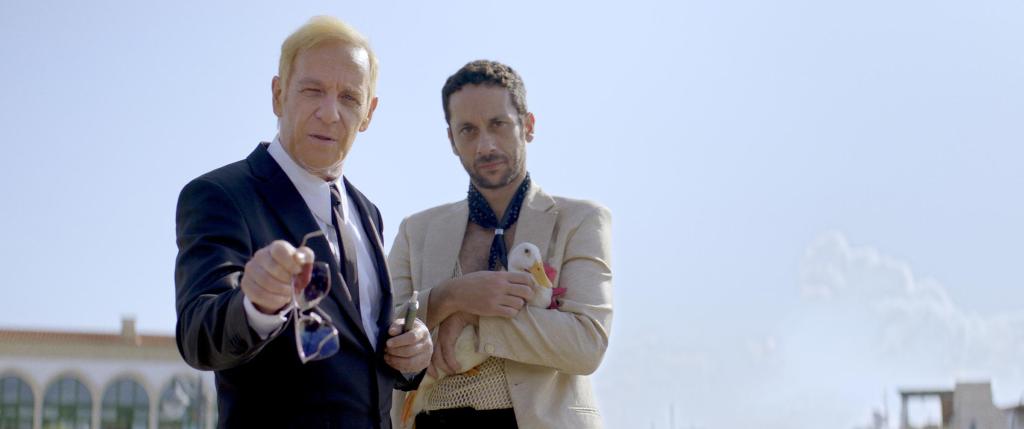
Ariel Bronze (right) in the film "Yes."
Indeed, shortly after the Ofir Awards were presented last week, Ariel Bronz, star of "Yes," was arrested by Tel Aviv police on suspicion of inciting terrorist acts. The evidence was a poem he had posted on social media two months earlier. The poem, which dealt with the cycle of revenge and bloodshed, also singled out the Israeli prime minister for criticism.
After several hours of interrogation, Ariel Bronz regained his freedom, but one of the conditions was that "the poem must be permanently deleted from the Internet, personal computers and my future published books. They told me that if I send this poem to others, I will be fined 10,000 Israeli new shekels (about 20,000 yuan)" - he accepted an interview with the media after paying bail and regaining his freedom.
Bronz said he has been a left-wing artist antagonizing Israel's right-wing government for years, and this wasn't his first time being detained; however, the timing of this arrest caught him by surprise. "They showed up at my house at 4 a.m., just hours after we had held the Ofir Awards ceremony. A few hours later, I was taken away by the police."
It's worth noting that the Israel Film Fund, which funded the production of "The Sea," is a public fund dedicated to supporting Israeli filmmakers regardless of their political affiliation. Consequently, it has been labeled an accomplice of the Israeli government by Palestinian filmmakers and a target of boycott. If "The Sea," which explicitly advocates for peace and opposition to war, were to be released in the United States and promoted for an Oscar, it would theoretically also face boycotts and protests from Palestinian film organizations and the signatories of the open letter.
It's no wonder that many left-wing Israeli filmmakers are complaining about being attacked from both sides, feeling like they're being tossed around. "The Israeli government doesn't care about the opinions of Hollywood stars. They probably don't even welcome their boycott, because it's essentially punishing us, the Israeli filmmakers," said Assaf Amir, president of the Israel Film Institute.