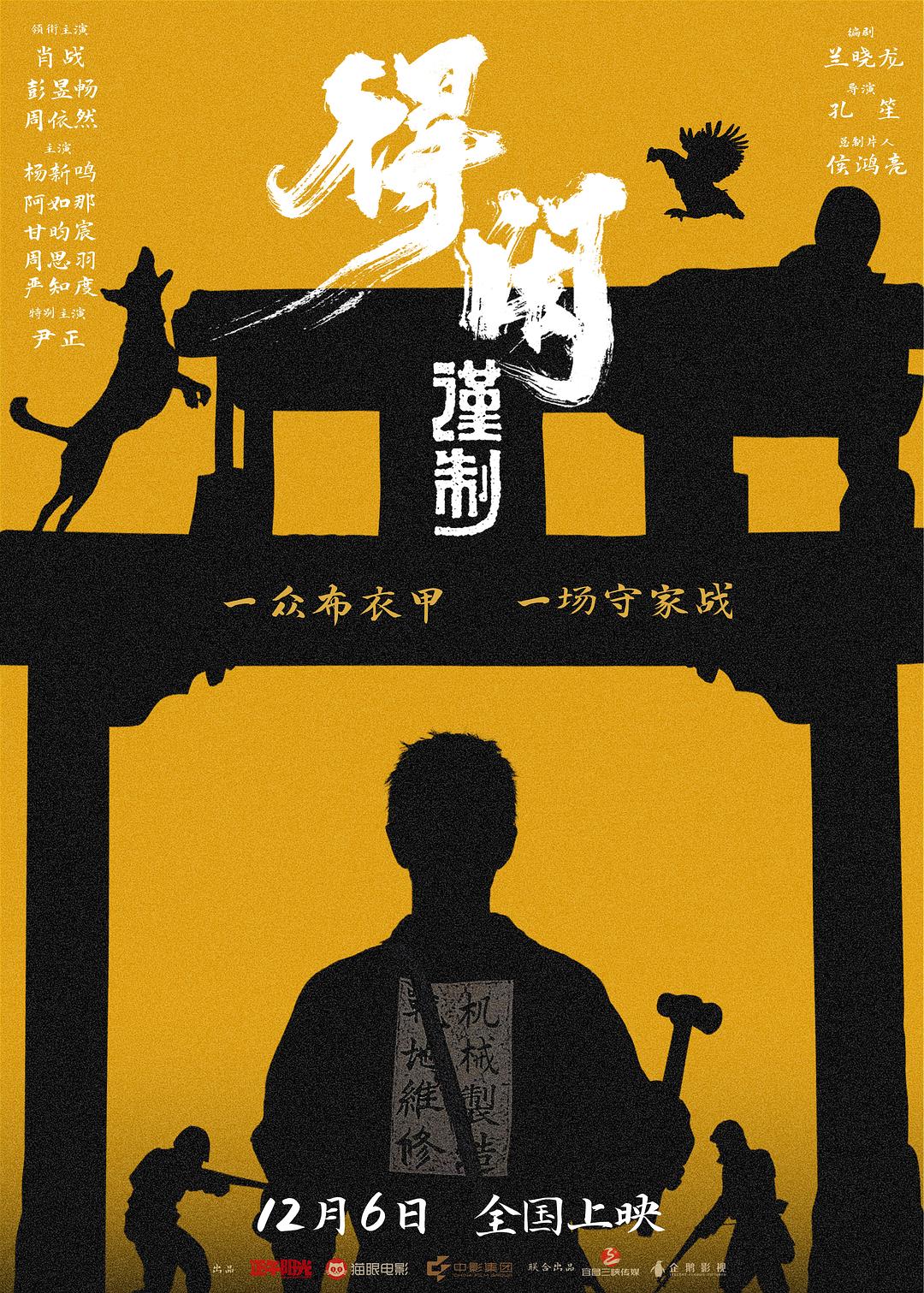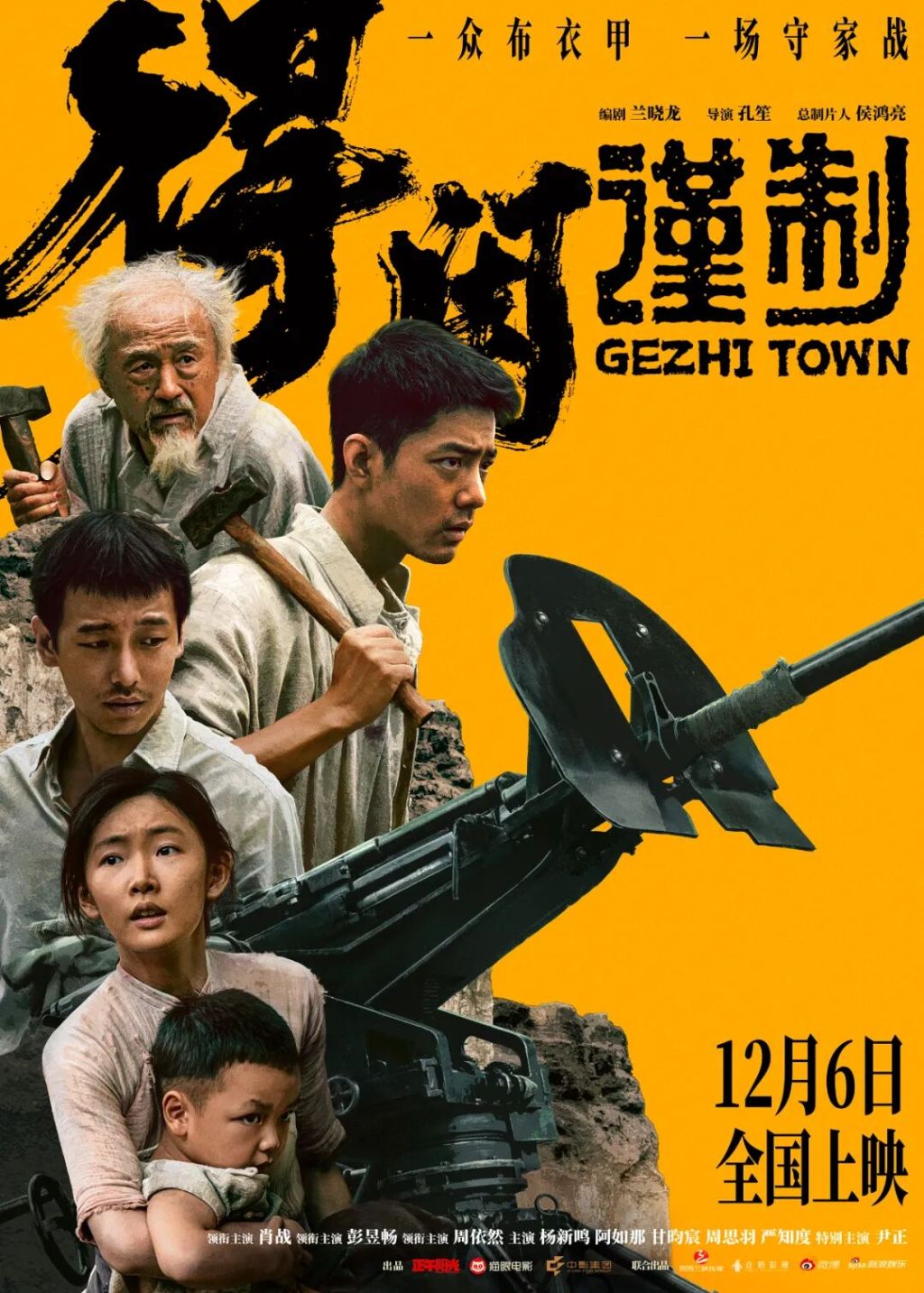
Since its release on December 6, the war-themed film "Leisurely Life" (得闲谨制), co-written by screenwriter Lan Xiaolong and director Kong Sheng, has performed brilliantly. On its opening day, it achieved a single-day box office of over 100 million yuan in just 15 hours, setting a record for the best opening performance of a domestic film in nearly two months.
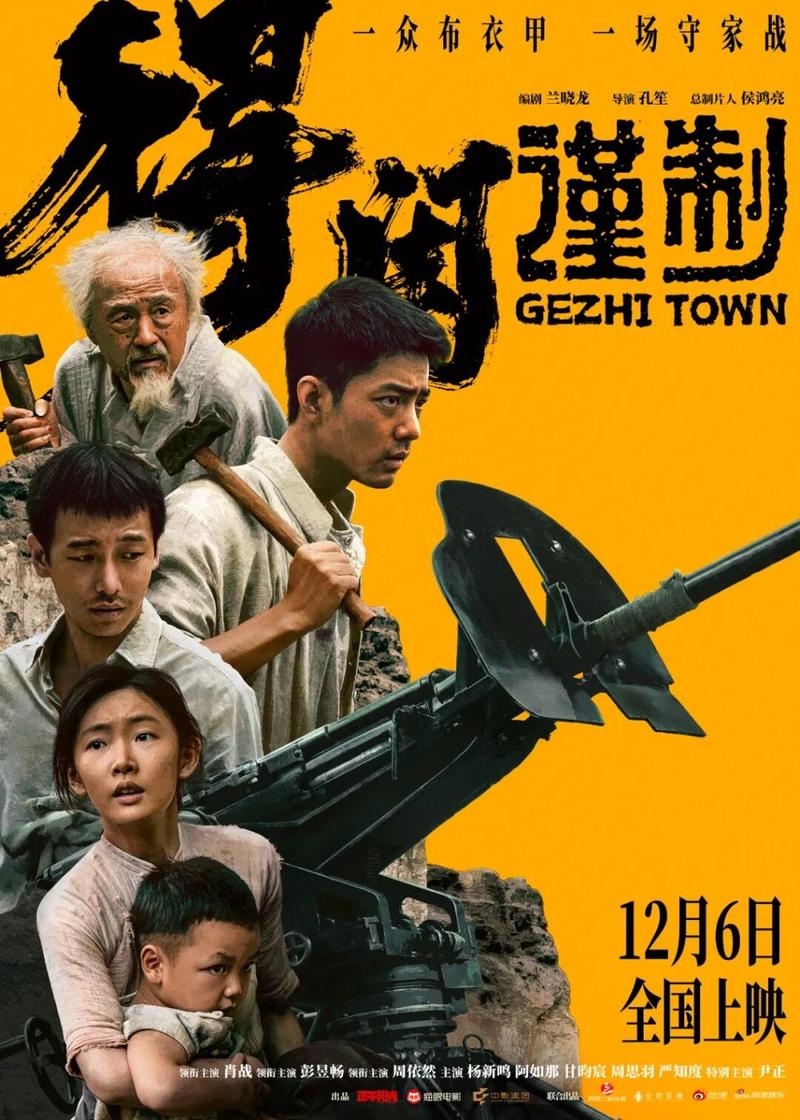
Movie poster
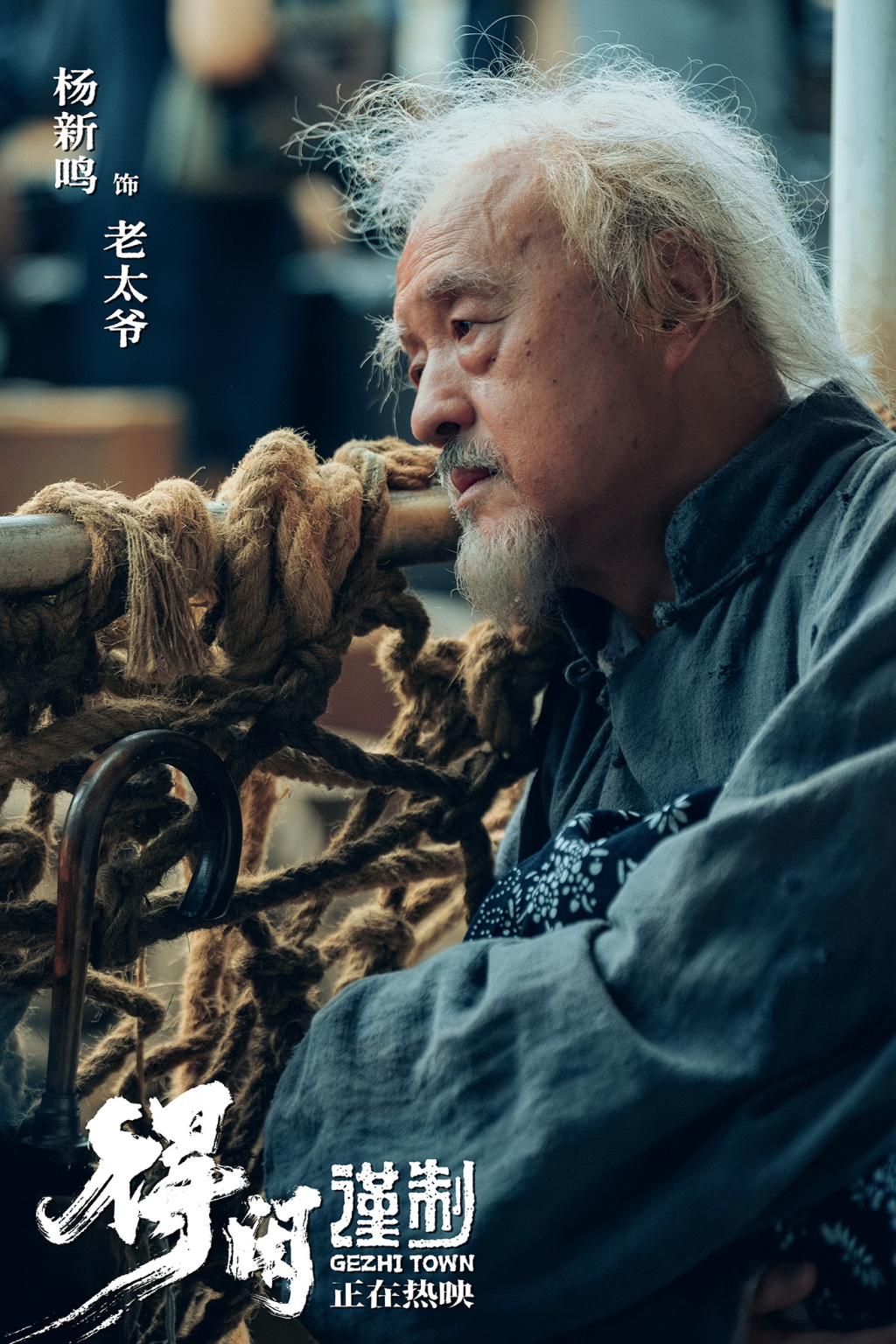
In this work that uses a small perspective to depict a grand historical event, 68-year-old national first-class actor Yang Xinming plays Grandpa Mo. From the very beginning, he stares intently at the Yangtze River… His performance in the scene where he threatens to jump into the river after catching his breath is even more powerful. To accurately portray the character's physical and mental state at over 90 years old, Yang Xinming put considerable effort into his appearance. In a recent interview with The Paper, he revealed, “For the Grandpa Mo's image, part of my hair grew out later, and the makeup artist also helped me with hair extensions, so it's not a wig, but a combination of my original hair and extensions. The beard did indeed grow out of my own.”
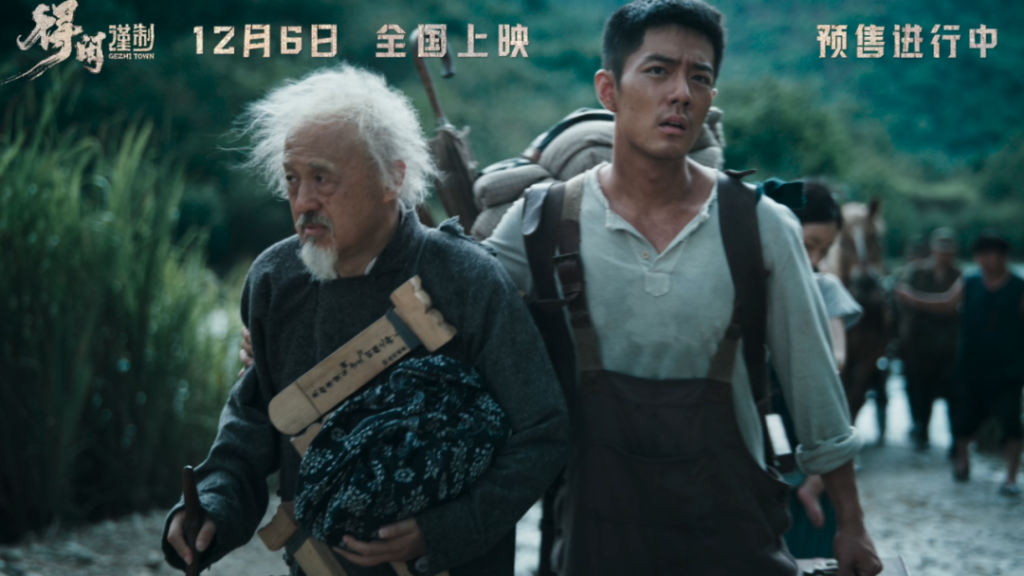
Stills from the drama "Leisurely and Cautious" featuring Yang Xinming and Xiao Zhan.
This dedication to detail is just one example of his unwavering belief that "the play is paramount" throughout his more than forty-year career. This actor, who hails from the Xi'an Drama Theatre, has won numerous awards for his roles in major plays such as "Guo Shuangyin and His Fellow Villagers" and "Death on the Gan River," and enjoys a stellar reputation in the industry. He once stated, "The stage has honed my control over characters. Whether it's the struggles of a corrupt official or the stubbornness of a farmer, it must be so realistic that the audience can believe it."
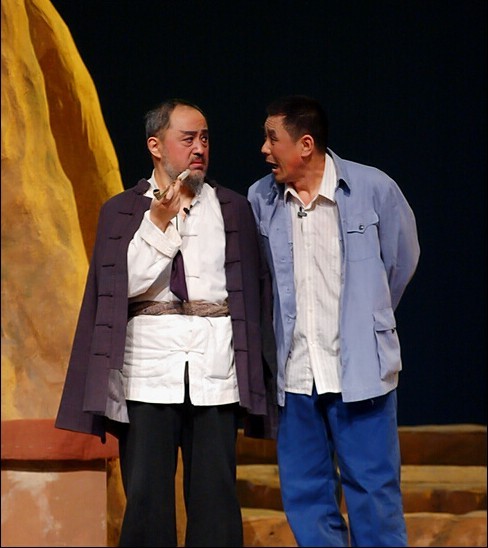
Stills from "Guo Shuangyin and His Fellow Villagers"
Speaking of his experience playing the role of Old Master Mo, Yang Xinming said that what touched him most was the character's obsession with "family": "Old Master Mo is a native of Nanjing. His family members, his younger children and grandchildren, all died in the massacre. Only he and his great-grandson Mo Dexian escaped. He was determined to die."
The film repeatedly features details such as the old man chasing piglets and muttering the misplaced lines of poetry, "The country is broken, but the mountains and rivers remain; I bow my head and think of my hometown." Yang Xinming imbued these details with profound meaning: "He recites the poem incorrectly because he 'already got it wrong'—his home is gone, his country is broken, even his memories are reversed. But it is precisely this misplacement that gives his pain weight." This delicate portrayal of the character's inner world allows the audience to see an elder who is both fragile and resilient amidst the flames of war.
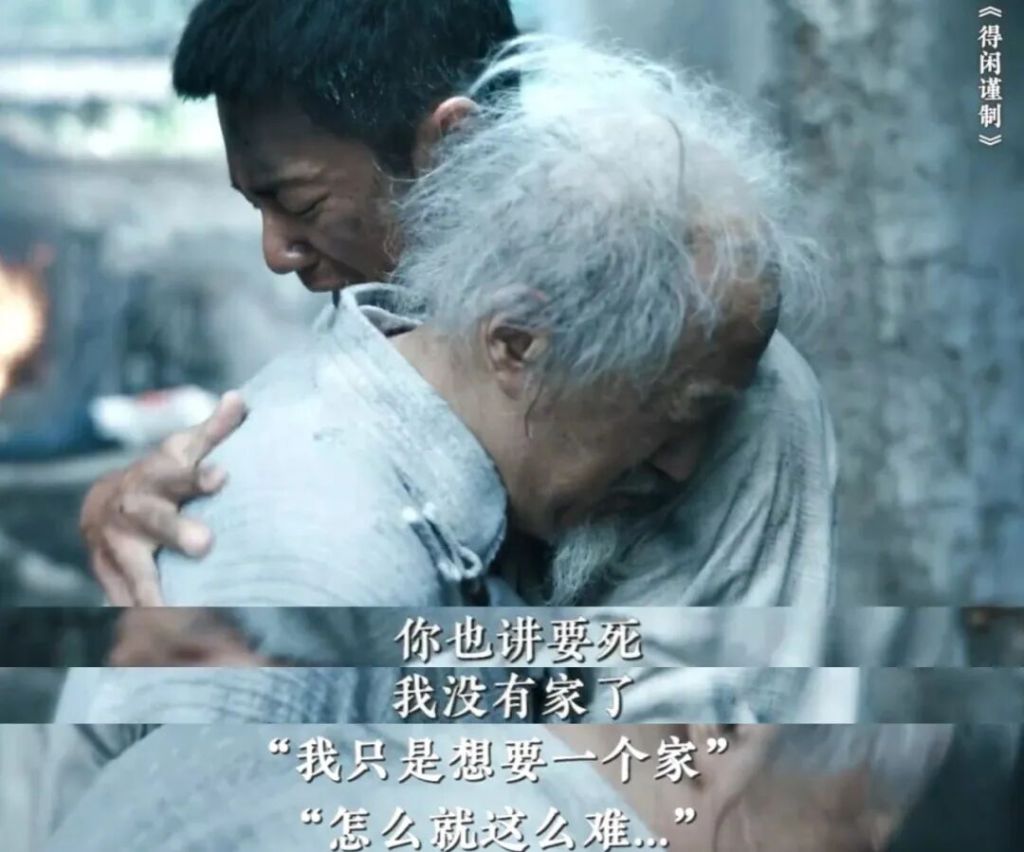
Image sourced from the internet.
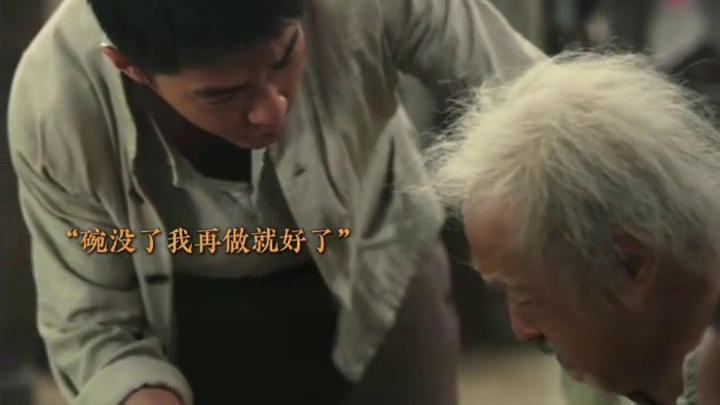
Speaking about working with young actors, Yang Xinming also expressed his admiration for Xiao Zhan, who plays Mo Dexian, and others: "In this movie, we both have to speak Nanjing dialect. Before filming started, I didn't even feel like I had fully mastered Nanjing dialect, but Xiao Zhan could already speak long passages of dialogue in Nanjing dialect!"
【dialogue】
The reason for taking on the project was, "First and foremost, screenwriter Lan Xiaolong."
The Paper: First, could you please explain why you took on the role of Old Master Mo in "Leisurely and Cautious"? Screenwriter Lan Xiaolong and director Kong Sheng collaborated over a decade ago on the highly acclaimed war drama "Life and Death Line." Your collaborations with director Kong Sheng, from "Battle of Changsha" to "No War in Beiping," have all been excellent productions.
Yang Xinming: I also collaborated with Lan Xiaolong on "The Good Guys" (2016). I discovered during that TV series that he is really good at writing scripts. Many of the lines are a mix of classical and vernacular Chinese, yet they are easy to recite. He started out writing stage plays, and "Erna Raid" won many awards back then, and was later adapted into the TV series "Soldiers' Raid".
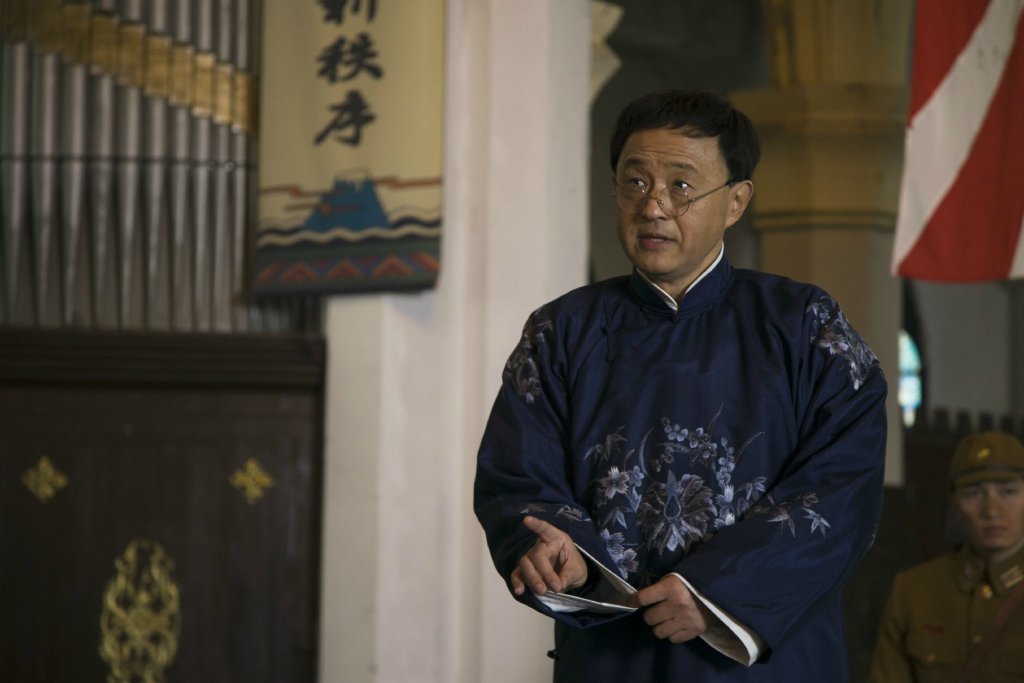
A still from the TV series "Battle of Changsha," which marks the first collaboration between Yang Xinming and Kong Sheng.
Returning to "Leisurely and Cautious" (why I participated), firstly, there's Lan Xiaolong, and secondly, as you mentioned, I've collaborated with director Kong Sheng many times, and this is his first feature film. It's an honor that they chose me and trusted me—I actually knew a long time ago that Lan Xiaolong and director Kong Sheng had been planning to make a film, at least seven to ten years ago. Until last year, they approached me saying they were preparing to make it; after all, we had worked together before and were relatively familiar with each other.
When I saw that the role was given to Grandpa Mo, I was naturally very eager to play it. My only concern was that the character was over 90 years old according to the script, while I was only over 60. There was a certain difference in appearance, so I definitely had to think of more ways to get closer to the character, including in terms of appearance.
The Paper: Some audiences know you through your sketches on the Spring Festival Gala, and later through your TV dramas and movies. But I know you are also a pillar of the Xi'an Drama Theatre, having honed your skills on stage countless times. I'd like to know how you approached the character this time?
Yang Xinming: I think that as actors, what interests us most when reading a script is the characters the screenwriter has created. Especially distinctive characters, not just generic typical characters, which immediately inspires the actor's creative desire. I must say that Lan Xiaolong's scripts are excellent, especially his skill in writing the dialogue of distinctive characters. Sometimes when you get a script, you feel that some lines shouldn't be spoken by the character, but you have to say them, which feels awkward. But this never happens in Lan Xiaolong's scripts; the lines he writes seem to grow out of the character.
I truly admire Lan Xiaolong from the bottom of my heart. We don't see each other often; we only met at the premiere the day before yesterday, and he also visited the set in Yichang during filming. We chatted, and all I could say was praise and admiration. His brilliance often lies in those short sentences, maybe just seven or eight words, or even five or six words, yet they encompass a wealth of information and subtly foreshadow events, perfectly capturing the character's personality and everything the character is trying to express at that moment. His control over language is truly exceptional.
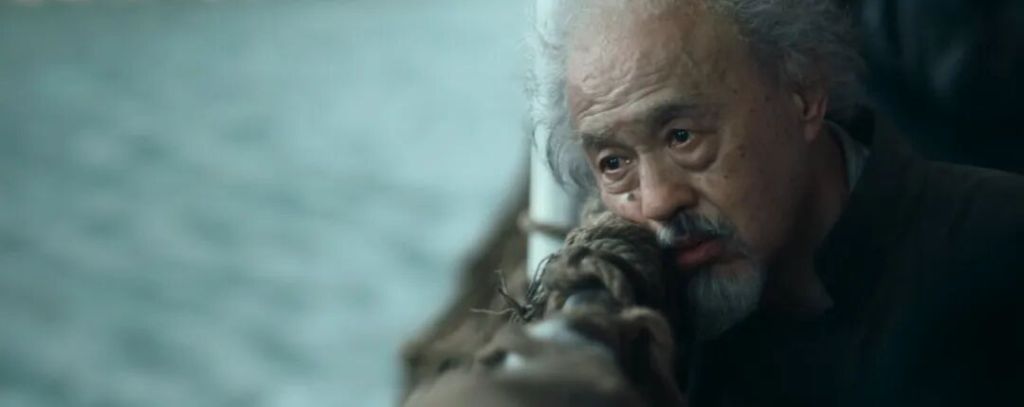
Stills from the TV series "Be Careful When You're Free"
The Paper: In the opening scene of "Leisurely and Cautious," your character, the great-grandfather, is on a boat fleeing a disaster, simply staring blankly at the river for nearly ten minutes without uttering a single line. This silence speaks volumes, successfully piquing the audience's curiosity. How do you interpret this performance?
Yang Xinming: The scene where Grandpa Mo and the others first appeared, I can't remember the exact description in Lan Xiaolong's script, but the general idea was that "he was like a dead man, and I didn't know whether he was dead or alive, with a blank stare."
This is actually a prelude of "building suspense before revealing the truth." The old man was from Nanjing. His relatives, all his younger children and grandchildren, had died in the massacre, leaving only him and his great-grandson Mo Dexian to escape. He desperately wanted to die. So the next scene is his plan to jump into the Yangtze River and drift back to his homeland. He had long wanted to die, but Mo Dexian had been deceiving him, saying that this was the Yellow River, and even if he jumped in, he wouldn't be able to go "home."
My personal interpretation of this scene is based on my age and life experience. I know many elderly people who live long lives often feel increasingly guilty, especially when faced with the tragedy of a parent outliving their child. They feel that their longevity has shortened the lives of their children and grandchildren. Since Old Master Mo had already escaped Nanjing, why did he still want to die? He wanted to protect Mo Dexian, to prevent anything from happening to this "only son" of the Mo family. The war wasn't over; the Japanese devils were still chasing them from above and below.
Until the grandfather and grandson met Xia Cheng (played by Zhou Yiran), they seemed to see hope again. As the saying goes, "Where there's a will, there's a way," and in the script, as they were disembarking, Mo Dexian had a line expressing "This place is nice," and the old man followed with "Nice butt," referring to Xia Cheng—not out of disrespect for his age, but because older people in that era generally understood the concept of "a face that indicates a son"—we can't judge or demand too much of the elderly of that time by modern standards. The old man felt that if Mo Dexian married this girl, it would be easier to give the Mo family a healthy son. Later, after they stayed in Yichang, sure enough, new hope arose: Mo Dexian was born! The old man naturally completely abandoned his thoughts of death.
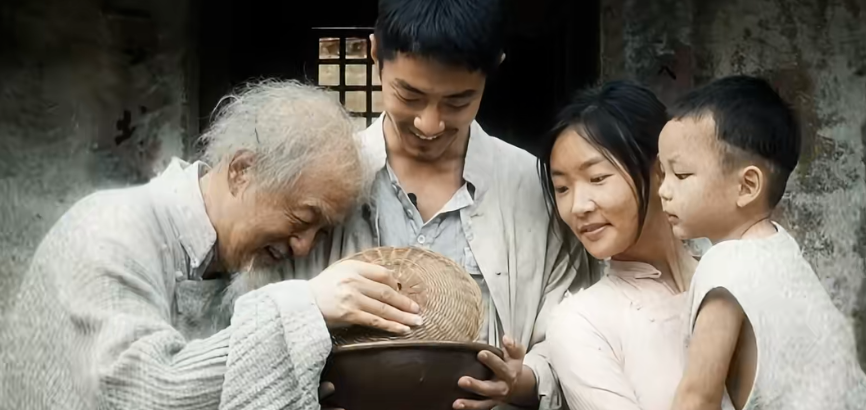
Stills from the TV series "Be Careful When You're Free"
"This kind of humor is a comedic technique with a tragic undertone."
The Paper: How do you understand your great-grandfather's transformation from an escapist who "only wanted a home" to someone who eventually participated in resisting the Japanese invaders?
Yang Xinming: After the Battle of Yichang began, the family fled to Gezhi Town, a place resembling a paradise. They thought they had escaped the war and could finally live in peace. Unexpectedly, the Japanese invaders returned. At this point, of course, he had to protect his descendants and his family—viewers should have seen him carrying ancestral tablets as he fled, a Chinese tradition—in those days, we built ancestral halls and even temples (for ancestor worship). A large part of the hope in ancestor worship was that the ancestors' spirits would bless future generations, ensuring the family's lineage would continue. Suddenly, the invaders, played by Yin Zheng, arrived, shattering the peace once more. Fueled by national and personal hatred, he was undoubtedly the most fierce, brave, and reckless of all.
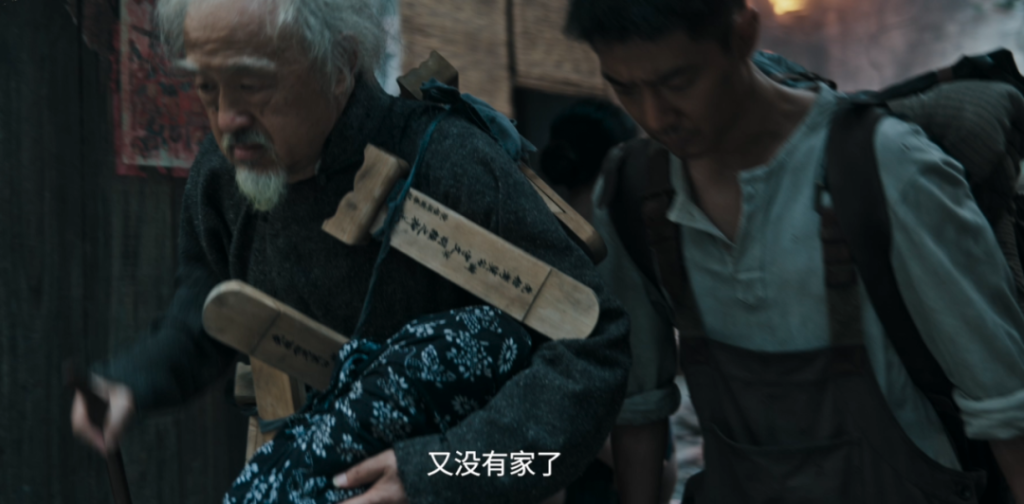
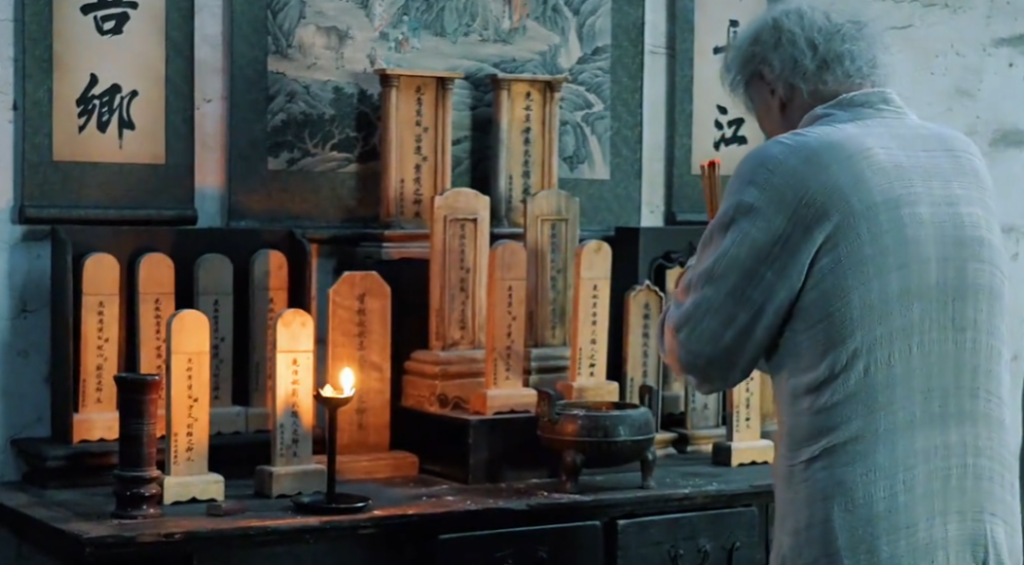
Stills from the TV series "Be Careful When You're Free"
The Paper: Your great-grandfather's sparse white hair is very impressive. You just mentioned that you need to look like the character. Could you elaborate on that?
Yang Xinming: Generally speaking, if there are good stylists in the production team, we actors don't usually express our opinions. We might occasionally suggest something like, "Would this be better?" or "Would it be better?" We would discuss it with the stylists and directors. Actually, before we went for the makeup test this time, they had already basically designed everything, and I was very satisfied.
The Paper: I just want to know if the old man's hair in "Leisurely and Cautious" is your own? And the beard, it looks like your own to me.
Yang Xinming: Before joining the cast of "De Xian Jin Zhi," I had just finished filming a period drama. That drama required me to shave my head, so for the old master's image this time, part of the hair was grown out by myself. The makeup artist also helped me with hair extensions, so it's not a wig, but a combination of "original" hair and hair extensions (laughs). The beard was indeed grown out by myself.
The Paper: I think "Leisurely Life" is a small but beautiful war film, and it is not without humorous scenes and comedic elements. What do you think?
Yang Xinming: This is screenwriter Lan Xiaolong's consistent style. This humor isn't just simple banter; it's a sophisticated comedic technique deeply rooted in the characters' fates, with a tragic undertone. I think this is precisely his brilliance. Without a profound understanding of war and the people within it, he couldn't have written it. In "Leisurely and Cautious," the interactions between the old master, Xia Cheng, and even Xiao Dengxian, all have a touch of light comedy and everyday life. Including some scenes between him and the Japanese soldiers played by Yin Zheng, there's a dark humor to them.
"Xiao Zhan speaks Nanjing dialect better than I do."
The Paper: Your scenes with Xiao Zhan in the movie were very moving. Could you comment on his performance?
Yang Xinming: In this movie, we both have to speak Nanjing dialect, and we're the only two in the film who consistently use it for dialogue. Initially, I felt that given my age and experience, including having friends from Nanjing and Jiangsu in my circle, my impression of Nanjing dialect had been ingrained in me for decades, making it easier for me to learn than for Xiao Zhan. Xiao Zhan is from Chongqing, so you can imagine the difficulty he faced learning Nanjing dialect.
The result was truly beyond my expectations. Before filming started, when everyone had just begun reading the script, and I didn't even feel like I had fully mastered Nanjing dialect, Xiao Zhan was already able to deliver long passages of dialogue in Nanjing dialect! He could speak such long lines very well; I even thought this kid was a language prodigy. Since filming hadn't started yet, I was thinking that once filming began, we would have to memorize lines and prepare every day, so we could progress step by step. His performance really made me feel a little ashamed.
The Paper: How would you evaluate Xiao Zhan's portrayal of the complex character Mo Dexian and his performance on set?
Yang Xinming: Xiao Zhan was very serious during filming. I rarely saw him joking around with everyone. When he wasn't filming, he would often be quietly sitting to the side, lost in thought. Perhaps he never wanted to detach himself from the character. This left a deep impression on me.
This movie was filmed in Yichang last July or August, in the height of summer. Yichang, you know, is located between two "furnace cities," Chongqing and Wuhan—it's incredibly hot. I had never drunk agastache before, but I drank it every day during that period.
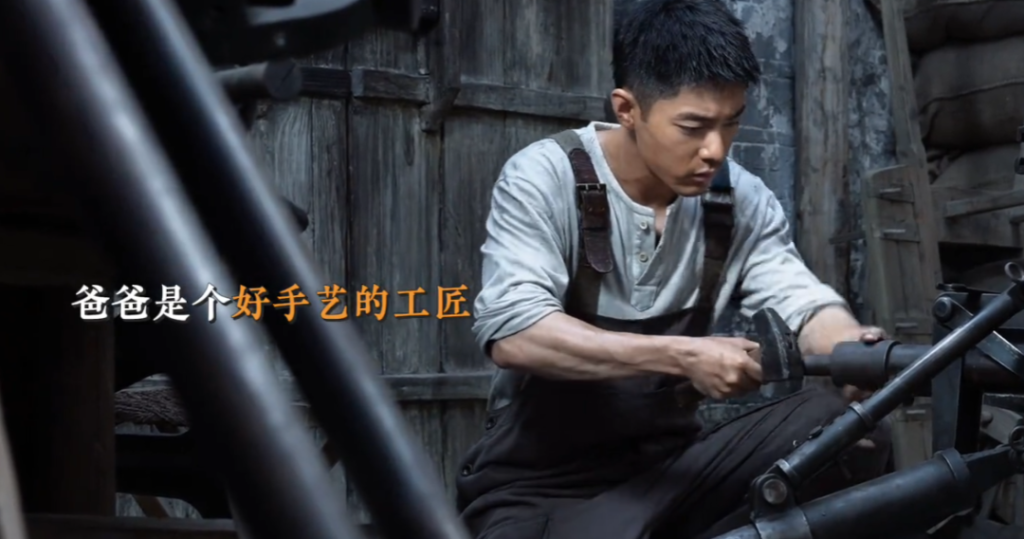
Xiao Zhan's stills
The Paper: Besides Xiao Zhan, you also worked with young actors such as Zhou Yiran, Yin Zheng, and Peng Yuchang this time. Could you give your comments on each of them?
Yang Xinming: To be honest, I think they're all good. These days, people often say online that young actors aren't serious about acting, don't memorize their lines properly, and just "count" them on set. From my observation, I've worked with quite a few young actors, and they all cherish their reputations and are very serious and dedicated to acting.
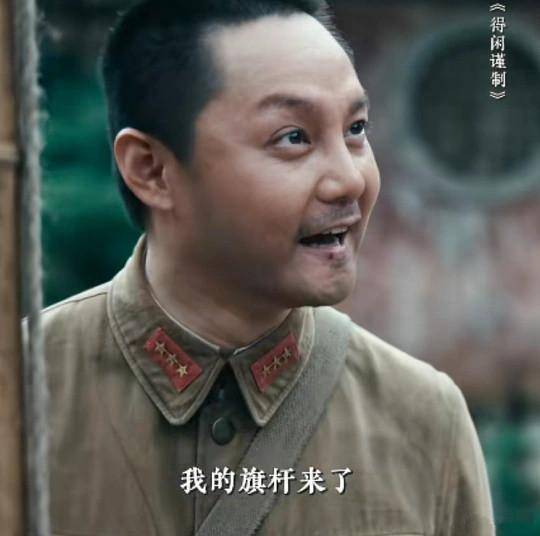
Yin Zheng plays a Japanese soldier
Peng Yuchang plays a second lieutenant in the Nationalist Army's air defense force. I didn't see him much in the movie. I also had quite a few scenes with Yin Zheng, and he was always fully immersed in his role on set. One scene that really moved me was when the old man was chasing after the Japanese soldier he played, wielding a knife. Initially, I was holding a real knife, but when we got close and started exchanging blows, the director had instructed the prop master to switch to a fake knife to avoid accidentally injuring the actor. I remember on set, Yin Zheng directly told the director that there was no need to change the knife; he should just let Mr. Yang (Peng Yuchang) use a real knife so it wouldn't look "unrealistic" on camera. He had already been accidentally injured once before in another scene, but he was still really brave for this one.
I've collaborated with Zhou Yiran quite a few times. In her first drama, I played her father. Later, in the web series "San Yue Gets a New Job," I played her mentor. "Leisurely and Cautious" is our third collaboration, and she was just as dedicated on set. We had two scenes together, and during preparation, she would sit in front of me, pondering the lines, unconsciously and unabashedly trying out various ways to present the scene, completely disregarding any sense of propriety. Usually, actors do this kind of preparation behind closed doors; besides me, there were many other staff members on set, but she didn't care.
The Paper: What advice do you have for young actors like Xiao Zhan who are still in the rising stage of their personal acting careers, regarding their career development and artistic pursuits?
Yang Xinming: What I dislike most is acting like a senior and condescending. I don't like doing that. Guiding actors' performances is the director's job. Besides, this is my first time working with many of the young actors, so it's even more inappropriate for me to say anything directly, especially since they are all very talented and so dedicated to the filming.
Unless it's a colleague I know very well and have a very good relationship with, when he occasionally struggles to find his footing on set, I'll privately suggest, based on my experience, that he try something different. Actors all have their own ways of getting into character and their own ideas. Your ideas aren't necessarily better than others', so it's best to respect each other.